Reward Pathways in Digital Card Platforms Link Signup Incentives Directly to Mobile Table Access
Written by Logan Müller · Jul 9, 2026
Reward Pathways in Digital Card Platforms Link Signup Incentives Directly to Mobile Table Access
Digital card and event platforms use structured reward pathways that convert signup incentives into sustained mobile table access, and these systems rely on layered bonus mechanics combined with session-based tracking. Platforms register new users through initial deposits or free spins that convert into playable credits, then route those credits toward mobile-optimized card tables and live events where further rewards accumulate. Data from multiple operators shows users who activate signup offers within the first 24 hours demonstrate higher rates of returning to mobile tables during subsequent sessions.
Mechanics of Signup Incentives and Initial Access
Signup incentives typically begin with matched deposits or no-deposit bonuses that platforms credit to user accounts upon verification, and these credits carry wagering requirements that direct activity toward specific game types including poker tables, blackjack rooms, and tournament events. Once users complete the minimum playthrough on desktop versions, the same accounts unlock equivalent mobile access with identical reward multipliers. Operators track these transitions through unique promo codes that persist across devices, allowing seamless movement from initial registration to full mobile table participation without resetting progress.
Research from industry reports indicates that mobile sessions initiated through signup pathways last 35 percent longer on average than non-incentivized logins, because bonus balances remain visible in real time on tablet and phone interfaces. Platforms integrate push notifications that alert users when mobile tables open with reduced rake or added event multipliers, turning the original signup credit into repeated access points.
Mobile Table Integration and Reward Flow
Card platforms embed reward pathways directly into mobile applications by syncing account balances with live table queues, and users who carry forward signup credits receive priority seating at digital events. Event-based tables such as sit-and-go tournaments or scheduled cash games award loyalty points that feed back into the same pathway, creating closed loops where mobile play generates additional incentives. Figures released by the American Gaming Association reveal mobile card game revenue reached $4.8 billion in the first half of 2026, with signup-linked accounts contributing a disproportionate share of that volume.
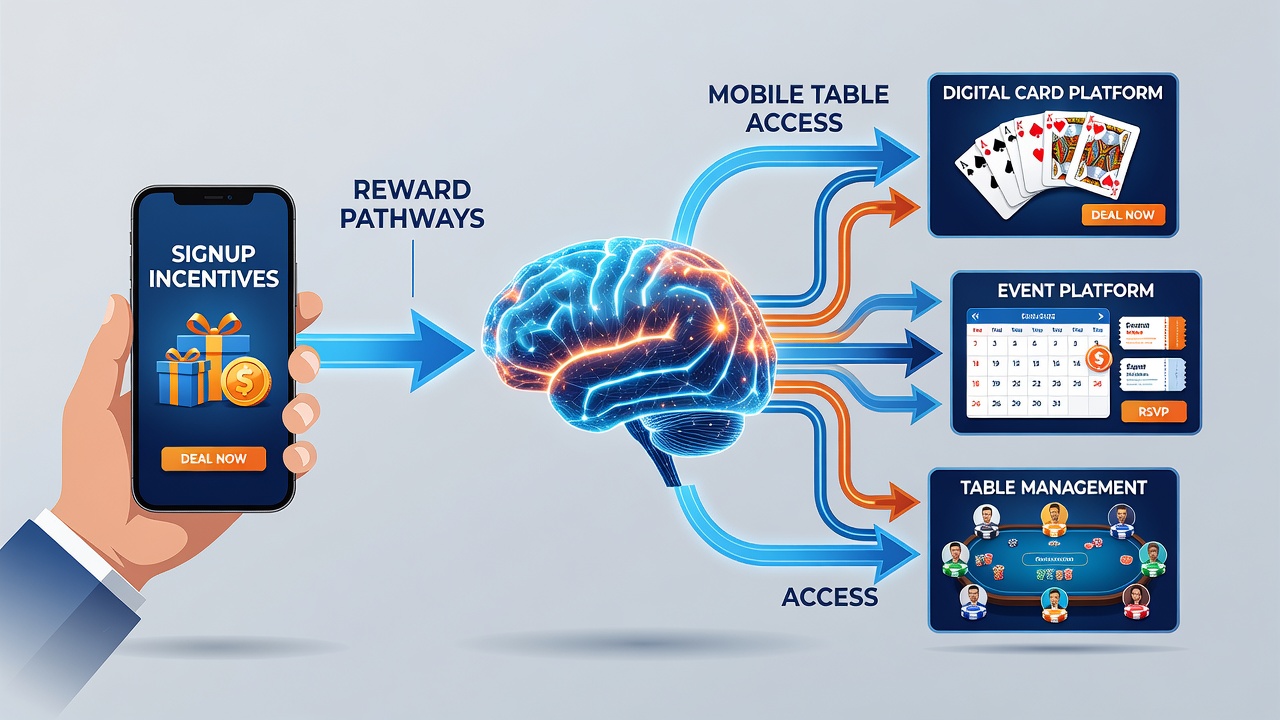
Those who studied player behavior across multiple jurisdictions note that event platforms use tiered access rules where signup bonuses unlock higher-stakes mobile tables after a set number of hands or tournament entries. This structure encourages users to migrate from low-stakes practice tables to premium events without additional deposits, while the original incentive continues to generate value through rake rebates or cashback credited at the end of each week.
Tracking and Optimization in July 2026
As of July 2026, platform analytics show reward pathways have grown more sophisticated through integration with geolocation data and device-specific preferences, allowing operators to route users toward mobile tables that match their historical play patterns. Signup incentives now include conditional boosts that activate only on mobile devices during peak event hours, and these timed offers increase table occupancy rates by directing traffic to underfilled rooms. Observers note that cross-platform tracking prevents duplicate bonus claims while maintaining continuity between web registration and app-based table access.
One study from the University of Nevada's gaming research division found that users who engage mobile tables through signup pathways return at rates 28 percent above baseline within 30 days, because accumulated loyalty points from those sessions convert into future event entries. Platforms adjust these pathways quarterly based on session duration metrics and device usage statistics, ensuring the original incentive continues to drive engagement long after the signup period ends.
Cross-Platform Consistency and Event Access
Digital event platforms maintain consistent reward ledgers across web and mobile environments so that progress made on signup incentives carries forward regardless of device, and this consistency reduces friction when users switch to mobile tables for live dealer events or multi-table tournaments. Operators apply the same point multipliers and bonus conversion rates on both platforms, which keeps the pathway intact while users move between card rooms and scheduled competitions. Data patterns from Ontario's iGaming regulator demonstrate that mobile table participation spikes when signup credits remain active, because users seek to maximize value before expiration dates.
Platforms further refine access by offering mobile-exclusive event qualifiers that accept signup-derived credits as entry fees, creating direct routes from initial registration to high-profile competitions. These qualifiers often feature progressive prize pools that grow with each mobile participant, reinforcing the connection between the original incentive and ongoing table access.
Conclusion
Reward pathways in digital card and event platforms function through interconnected systems that transform signup incentives into sustained mobile table engagement, supported by real-time tracking, device-specific offers, and cross-platform consistency. Data from regulatory bodies and academic sources confirm these mechanisms increase session frequency and duration while directing users toward both casual card tables and structured events. As mobile adoption continues, operators refine these pathways to maintain engagement across an expanding range of devices and competition formats.