Digital Gambling Migration: How Off-Peak Hours Influence Shifts from Card Rooms to Event-Based Apps in New Markets
Written by Logan Müller · Jun 13, 2026

Digital Gambling Migration: How Off-Peak Hours Influence Shifts from Card Rooms to Event-Based Apps in New Markets
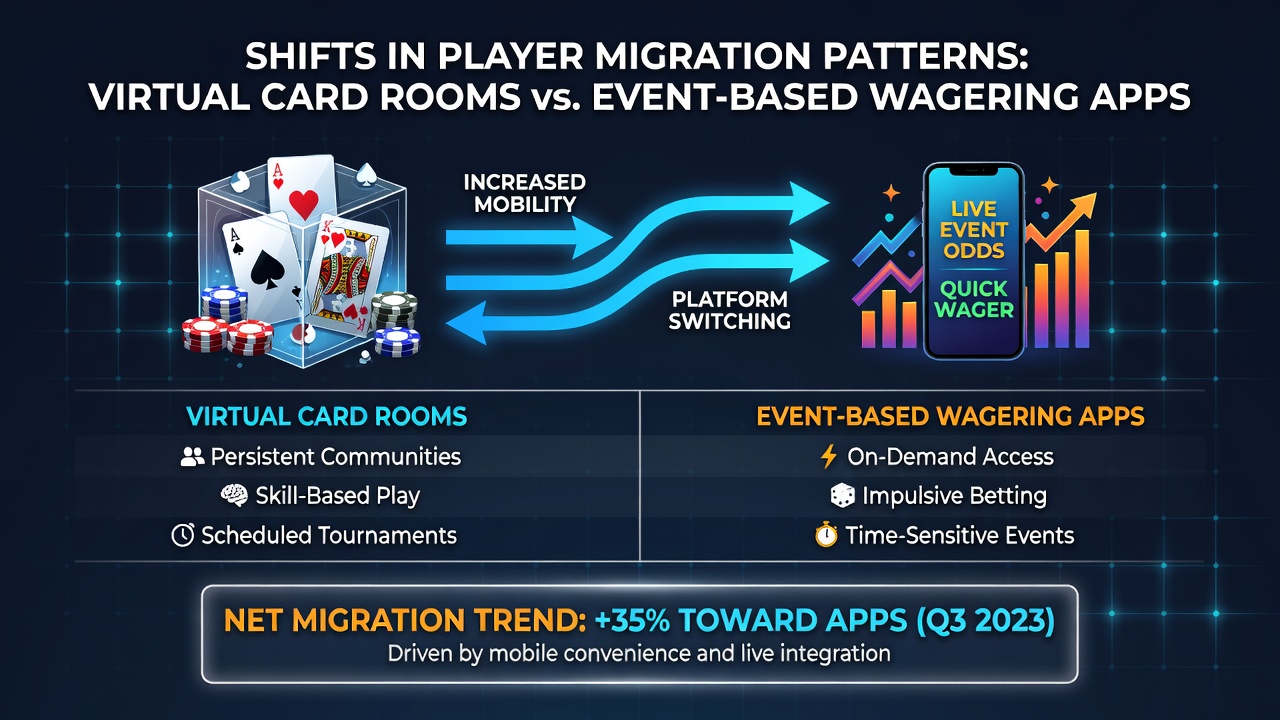
Player activity in virtual card rooms tends to drop noticeably during off-peak windows while event-based wagering apps see corresponding increases across several emerging digital markets adn data collected through June 2026 highlights these movements with greater clarity than earlier periods. Observers tracking session logs report that users often complete shorter poker or blackjack rounds before switching to live sports or e-sports betting interfaces that run continuously in regions such as Southeast Asia and parts of Latin America.
Defining Off-Peak Windows Across Regions
Off-peak hours generally fall between 2 a.m. and 8 a.m. local time in most markets yet the exact boundaries shift according to cultural schedules and timezone overlaps. In the Philippines and Brazil these intervals coincide with reduced live dealer traffic at virtual tables while mobile apps offering instant event markets maintain steady engagement. Researchers examining aggregated telemetry note that average session lengths in card rooms contract by roughly eighteen percent during these stretches whereas betting apps record upticks in micro-bets placed on overnight matches or pre-event odds.
Platform Features Driving the Movement
Virtual card rooms rely on structured game cycles that require multiple participants to start new hands or tournaments and this structure creates natural pauses when fewer players remain online. Event-based apps in contrast allow single users to place wagers on ongoing or upcoming fixtures without waiting for table fills and the difference in entry friction appears to steer traffic once late-night activity declines. Mobile interfaces further support quick transitions because push notifications and simplified deposit flows keep users inside the same ecosystem rather than prompting exits to external sites.
Regional Data Snapshots from June 2026
Telemetry shared by operators in the Philippines shows a measurable redistribution of active accounts between card-focused platforms and multi-sport betting apps during the early morning window. A parallel pattern surfaces in Mexican and Colombian markets where regulatory filings indicate higher volumes of smaller-stake wagers on regional football and basketball events after midnight. According to data released by the Philippine Amusement and Gaming Corporation in their June 2026 summary, card room participation fell while real-time betting interfaces captured the displaced volume without requiring users to navigate separate applications.
Technology and Payment Factors
Payment rails that settle within seconds encourage continued play on betting apps because users can fund accounts and withdraw small winnings without leaving the mobile session. Card rooms often route through the same processors yet the requirement to join or wait for tables adds friction that becomes more pronounced when overall traffic thins. Observers note that loyalty point systems spanning both product types reduce the perceived cost of switching and several platforms now display unified balance indicators that update across card and event modules in real time.
Regulatory Context in Emerging Markets
Regulators in multiple jurisdictions have begun requesting granular hourly data to understand these flows and distinguish between organic player preference and algorithmic nudges. A study conducted through the Center for Gaming Research at the University of Nevada examined anonymized logs from partnered operators and found consistent directional movement toward event-based products once card room occupancy dropped below defined thresholds. The findings align with patterns reported by licensing bodies in Vietnam and Peru where similar reporting requirements took effect earlier in 2026.
Future Monitoring and Platform Adjustments
Operators continue to refine matchmaking algorithms and event calendars to retain users inside card environments longer or to facilitate smoother handoffs when activity declines. Some platforms now surface hybrid lobbies that combine low-stakes card games with simultaneous betting options on adjacent screens and early indicators suggest these interfaces moderate the scale of migration during off-peak hours. Continued collection of session-level metrics through the remainder of 2026 will clarify whether these adjustments stabilize participation or simply redirect the same underlying movement.
Conclusion
Patterns observed through June 2026 demonstrate that off-peak hours produce repeatable shifts in player location between virtual card rooms and event-based wagering apps within emerging digital markets. The movement appears driven by differences in game availability, session structure, and payment speed rather than any single regulatory or technological change. As data collection expands and platforms introduce interface modifications, the magnitude and direction of these flows will remain measurable through routine operational reporting.